Concept 1
The Factors of Production
Land, labor, capital, technology and entrepreneurship: the inputs every business needs, and why they come from households, not businesses.
The field of economics is consumed with the development of how things are produced. Economics can be called a social arrangement that identifies how products are produced. The field considers the scarce nature of resources. And before anything can happen in an economic environment, these scarce resources, which are critical inputs into making products, must be made available to businesses.
Thoughts about where a business will be placed, who will work in it, and where the efficiencies will stem from are all important thoughts about where the inputs will originate. These inputs are called the Factors of Production. These factors encompass the most critical resources for developing a business.
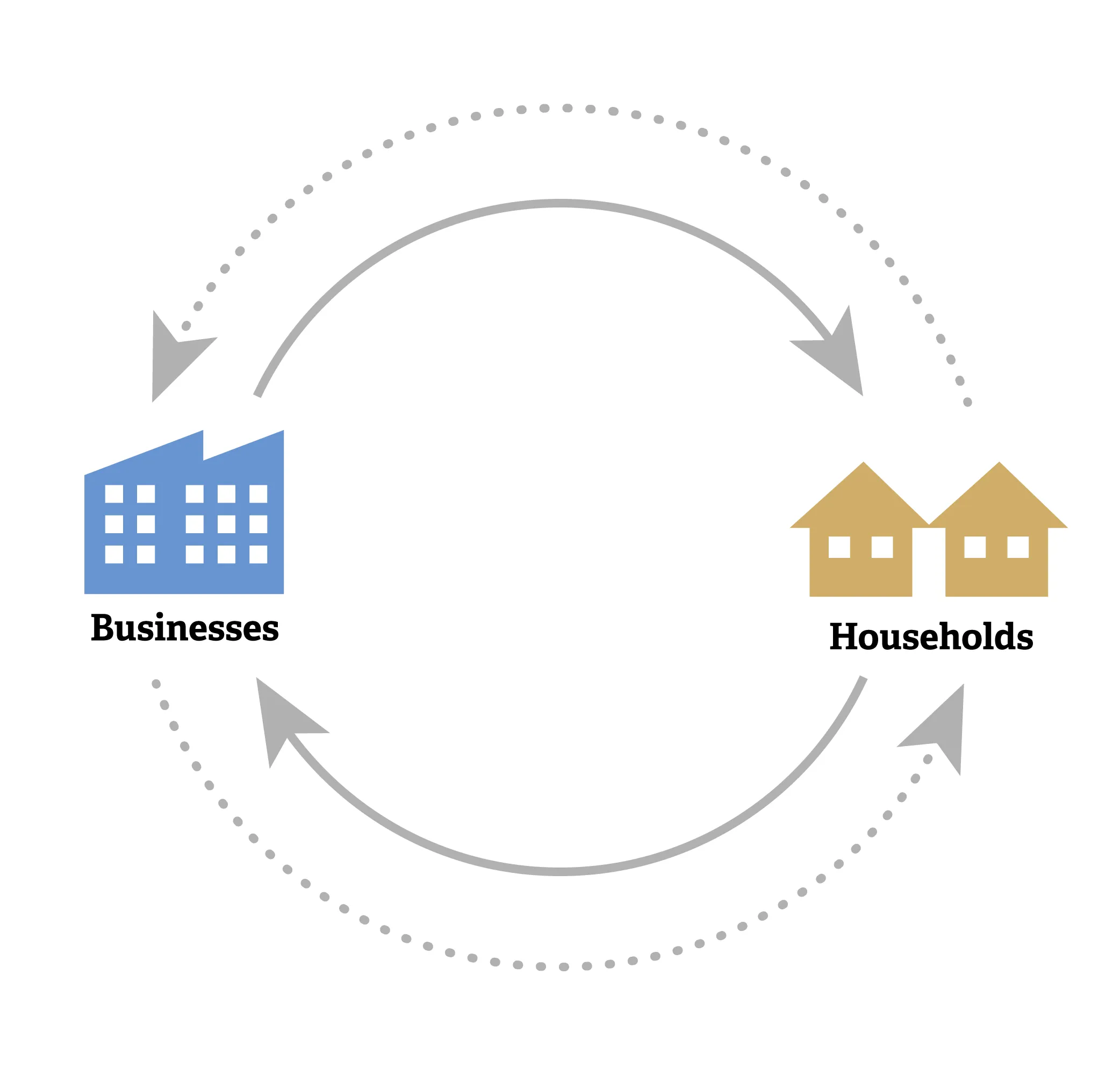
But before homing in on the factors of production, it is important to consider that there are two key players involved with the factors of production. These two players are called households and businesses. The term household as it relates to the factors of production generally represents individuals in society. On the other hand is the concept of businesses. Businesses are the entities which produce the products that households purchase.
There are two levels of relationship between these entities. From one perspective, the businesses produce products that households purchase. Households are consumers that thrive on products to lead a fulfilling life. This includes everything from food to toiletries, to furniture, to automobiles, to meals, and even housing.
However, the other level of relationship between the two entities involves the households as suppliers to businesses. In order to produce products, the businesses require resources that are inputs to manufacturing. Those resources are represented as the Factors of Production. The Factors of Production are are supplied by individuals to businesses. They are defined as inputs used in production to make an economic profit. This might seem wrong when initially thinking about it, but think about where a business gets the land for its operations, the workers who carry out the mission, and even the ideas that it will use to evolve into products and services. These come from individuals, not the businesses themselves.
Land, labor, and capital are considered the classical factors of production. The factors of production themselves are not transformed in the production process. All of those things must go into it to make the output that the business is producing. More recently, technology and entrepreneurship have been added as factors of production to reflect the how to mix these inputs and optimize efficiency.
Businesses without land cannot produce. Businesses without employees cannot produce. Businesses without the proper equipment cannot produce. Businesses without entrepreneurship cannot innovate. Businesses without technology cannot stay relevant. Nonetheless, these factors themselves cannot make the product or produce the service. Modern businesses are continually determining how to best mix these inputs to optimize their own outputs.
The inputs, the Factors of Production, include the following:
 Land (N) The place where companies conduct business. In economic texts, land is often represented by the letter N.
 Labor (L) The effort provided by individuals to businesses. In economic texts, labor is often represented by the letter L.
 Capital (K) The equipment and machinery that enable companies to do business. In economic texts, capital is often represented by the letter K.
 Technology The concepts (including but not limited to the equipment) that improve the efficiency of business.
 Entrepreneurship The mixing of the other factors of production in new ways to create new business opportunities.