Concept 5
The Gross Domestic Product (GDP)
The key measure of an economy’s output: what it counts, what it leaves out, and how it differs from the GNP.
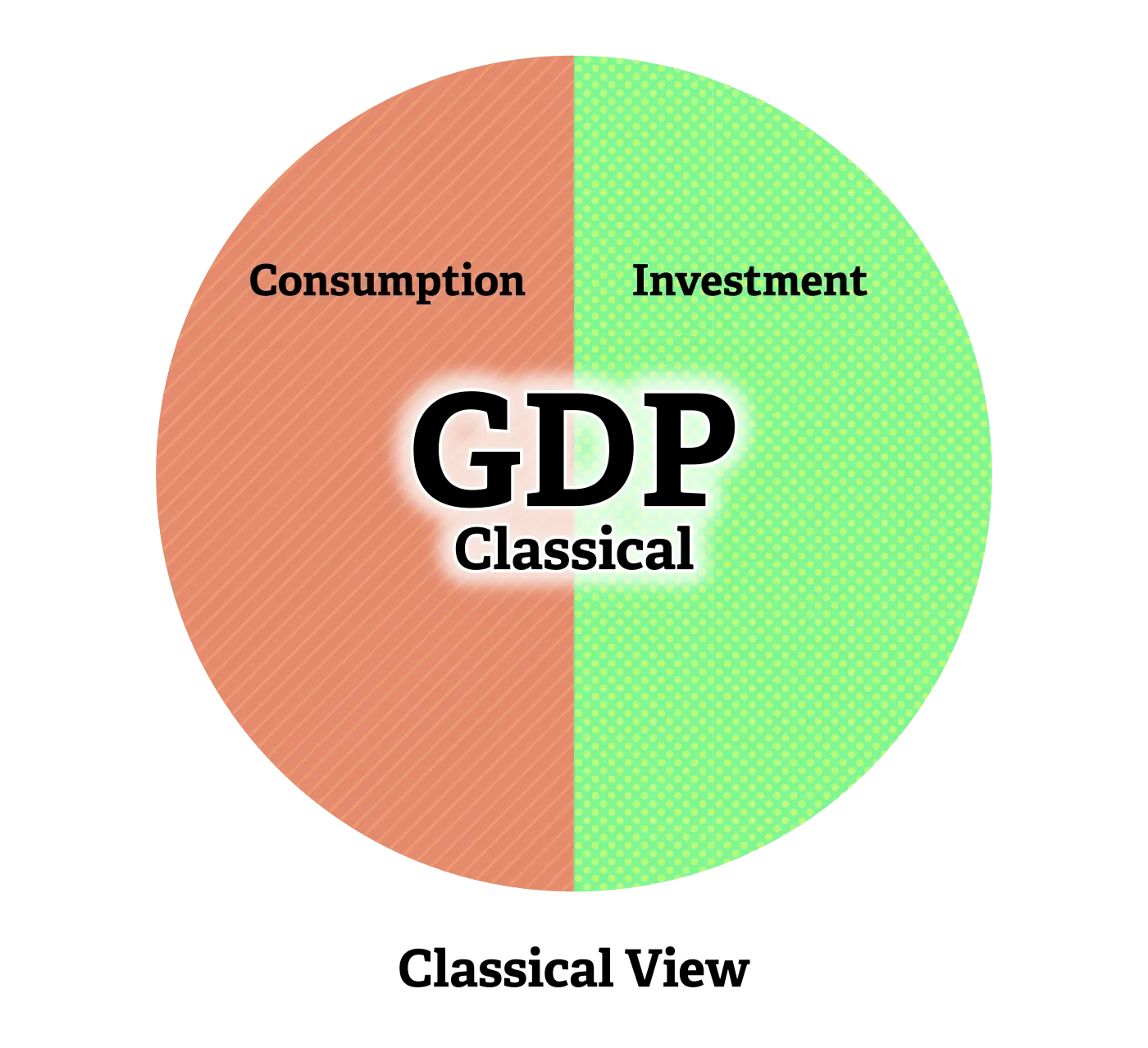
One of the key indicators in an economy today is the gross domestic product, or more commonly called the GDP. The GDP represents the activity of all final goods sold in an economy. It includes all goods produced within the border of a company within a given period of time, usually one year. It is an important indicator, because it gives economists a way to measure the current output of any economy versus prior years. And this measurement can be viewed at any level of the economy, from as granular a point as a city, to an industry, a state, and all the way up to a national economy.
As previously mentioned, all goods produced within an economy should be included, so it is good to look at some examples for clarification. A truck manufactured by an American auto manufacturer in Detroit, such as Ford, would obviously be included. Ford is an American-based company and in this case the vehicle was built in an American city. There is little to question in that scenario.
However, less clear is whether a truck manufactured by Toyota in Tennessee would be included in the United States GDP. The answer to this is yes, even though the company is a foreign company (based in Japan), the product was made in the borders of the United States. The country of origin for the company is not important. The key determinant for whether a product belongs to a particular GDP is the country in which it is manufactured.
How about a Ford truck that is manufactured and sold in China? No, that would not be included because it was manufactured in China, even though a company based in the United States made it. Again, look to the company where the product is manufactured as the significant determinant.
It is important to dig deeper into the GDP to gain a better understanding of its functionality. The GPD formula only includes the sale of final goods and services. This is to avoid “double counting” the components that go into final products and ensures that all finished output only gets counted one time. If not for this approach, finished goods and services would be counted twice in the GPD.
There are also other counting limitations when calculating the GDP to ensure that the reported number is as accurate as possible. This means that there are many things moving through the economy that are not included in the GDP. The GDP does not include products that are used and sold a second time; illegal products; underground activity; goods produced overseas; transfer payments, including unemployment, Social Security, and welfare programs; and purely financial transactions.
Because the United States has a long-established history, the GDP tends to grow as a relatively slow rate. Most government and economic experts would agree that three percent growth for the economy is ideal of its current size and state. Historically, the GDP has grown by just a few percent every year, but that continual slow and steady growth had made America the top economy of the world and kept it at the point for a very long time.
And while the United States economy has had a relatively slow growth rate for a long time, that slow by steady increase still results in the world’s largest economy and continues to grow. In the past decades the GDP has grown significantly, even though the growth has been at relatively low percentages of year-over-year increase.
The following graph shows you the growth rate of the economy over the past few decades in nominal dollars. The nominal GDP is the measurement of economic output that does not adjust for inflation. If you see a comparison of nominal versus real GDP, then real GDP differs in that it is adjusted for output to reflect the effect of inflation.
| Year | GDP in dollars (trillions) |
|---|---|
| 1970 | 1.0 |
| 1975 | 1.6 |
| 1980 | 2.8 |
| 1985 | 4.3 |
| 1990 | 5.9 |
| 1995 | 7.6 |
| 2000 | 10.2 |
| 2005 | 13.0 |
| 2010 | 14.9 |
| 2015 | 18.2 |
| 2018 | 20.5 |
Though the GDP is the most prominent tool for measuring the output of an economy, there are other measurements. One that was more commonly used in the past is the gross national product, or GNP, was a common measurement at one time. The GNP works similarly to the GDP except that it tracks the amount of goods produced by the companies based within the country instead of the product produced within the borders of a country. In this case the nation of origin for the company making the product is the key determinant.
Let’s look at the truck scenarios mentioned above and measure those transactions against the GNP. The Ford truck manufactured in Detroit is an easy yes for its inclusion in the GNP for the United States. However, The Toyota truck manufactured in Tennessee is not part of the United States GNP, as Toyota is not a U.S. company. That vehicle would belong to Japan’s GNP. But, the Ford truck made and sold in China would indeed be part of the United States’ GNP.
The following matrix summarizes these scenarios.
Is this activity included in the United States GDP and GNP?
| Scenario | Included in U.S. GDP? | Included in U.S. GNP? |
|---|---|---|
| Ford truck manufactured and sold in U.S. | Yes | Yes |
| Toyota truck manufactured and sold in U.S. | Yes | No |
| Ford truck manufactured and sold in China | No | Yes |
Ultimately, the gross domestic product is the key measurement of activity in the economy. While other measurements exist, this is the one you are most likely to encounter as you research or study the economy.