Concept 3
Scarcity and Opportunity Costs
No one has unlimited resources, so every choice gives something up. What does sitting in a lecture really cost you?
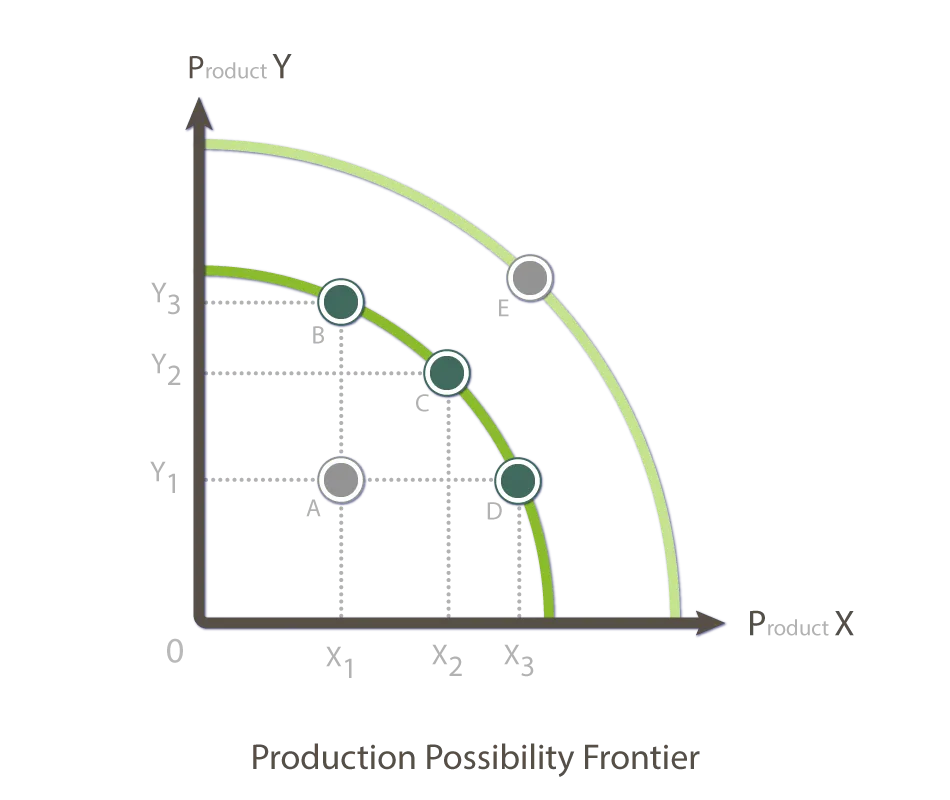
Society makes choices based on conditions of scarcity. Whether a business or individual, scarcity of resources is a concern for everyone. No one has truly unlimited resources. Even a billionaire can whittle away their money if they are careless. Successful companies like Apple have gone to the brink of financial disaster because they did not properly allocate resources. They came back, but so many more have not survived. No entity, including individuals and businesses, is safe from the issue of scarcity.
The problem of scarcity leads to the necessity to have to make decisions about how to spend money or invest resources. When making decisions under the conditions of scarcity, we act differently. A great analogy to this is how a football team acts while trailing in the fourth quarter versus a team that is ahead. This decision leads to the importance of understanding opportunity costs. When faced with a decision between two alternatives, the opportunity cost is the gain from the lost option that is not chosen when there are two options.
As an example, what is the cost to sit in a classroom to listen to a lecture? That depends to a certain degree. At the very least, you can identify that you will lose the enjoyment of whatever leisure activity you prefer to do. You give that up in order to learn. But even an accountant and an economist would look at this differently. The accountant might say your opportunity cost is $2,500. You are giving up lost wages and the actual cost of the course. Those are known costs that can be clearly defined.
However, the economist might say that the opportunity cost to sit in class is $3,100. In addition to the costs that the accountant would calculate - tuition and lost wages - the economist might also factor in the loss of the notebook pages used for this course, the used-up ink pen that you used predominantly in this class, and even the wear and tear on the car for the extra few miles that this course is beyond your place of work.
And most important, the economist is concerned with intangibles. What did you give up that is harder to calculate, such as the fun you could have had by going to the movies instead of going to class? It’s hard to calculate, but important nonetheless. And it also can explain why some students might make certain decisions, such as not attending class to do something else. To them, the something else that they did had more perceived value than going to class, even though that something else may be relatively intangible and hard to quantify.
Everyone is faced with opportunity costs because of scarcity. It is important to remember that in all of your financial decisions, and it is important to consider the small details as the economist would when calculating the opportunity costs.